 If you’re still doing SEO the way you were two years ago, you’re already behind. Google’s search results now routinely include AI-generated summaries, “People Also Ask” boxes have multiplied, and a growing share of searches never result in a click at all. None of that means SEO matters less — it means the tactics that win have changed. Here’s a practical look at the SEO trends for 2026 that are actually moving rankings, and what to do about each one.
AI Overviews Are Changing What “Ranking #1” Means
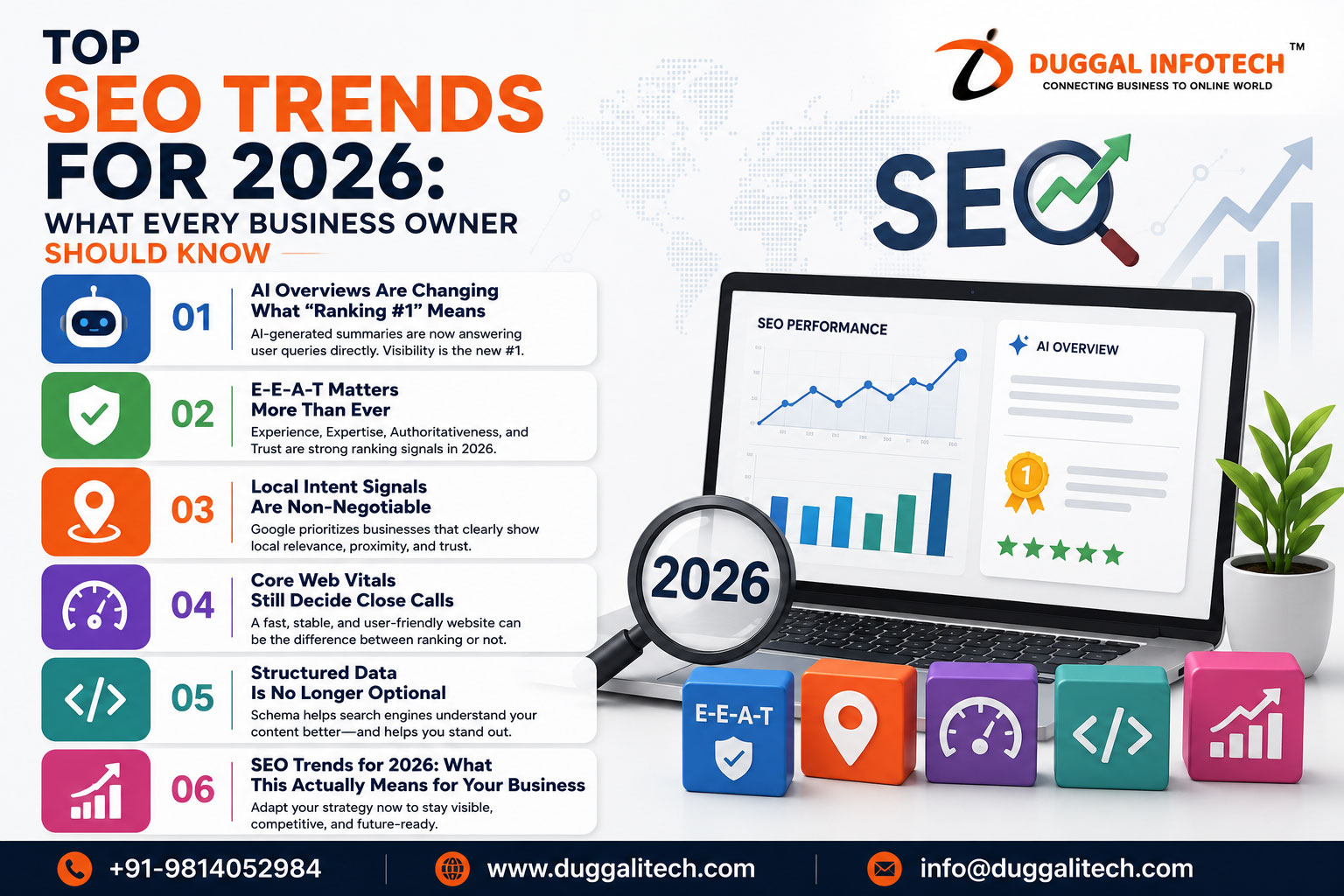
Google’s AI-generated overviews now appear above the traditional results for a large share of informational searches. Being the top blue link isn’t enough anymore if an AI summary is answering the question before anyone scrolls down. The businesses adapting well are writing content that AI systems can easily extract and cite: clear, direct answers near the top of the page, followed by the supporting detail. If you want to go deeper on this shift, we’ve written a full guide to AI Optimization (AIO) and what it means for your content strategy.
E-E-A-T Matters More Than Ever
Experience, Expertise, Authoritativeness, and Trust (E-E-A-T) has gone from an abstract guideline to something Google’s systems can evaluate fairly directly — through author bios, real case studies, cited sources, and consistent publishing history. Generic, unattributed content is easy to spot and easy to outrank. If your blog posts don’t have a named author, real examples, or any sign that a human with actual experience wrote them, that’s the first thing to fix.
Local Intent Signals Are Non-Negotiable
For any business that serves a specific city or region, local signals now carry as much weight as traditional on-page SEO — sometimes more. A complete, active Google Business Profile, consistent business information across directories, and genuine customer reviews influence both map pack rankings and regular organic results. This is especially true in competitive local markets, where dozens of businesses are all targeting the same “[service] near me” searches.
Core Web Vitals Still Decide Close Calls
Page speed and stability aren’t a new ranking factor, but they’re still an underrated one. When two pages cover a topic equally well, the faster, more stable page tends to win — and a slow, janky page can lose rankings it should otherwise hold. Large uncompressed images and render-blocking scripts are still the most common culprits on small business sites xe2x80x94 Google’s own Core Web Vitals guide is a good place to check where your pages stand.
Structured Data Is No Longer Optional
Schema markup — the structured data that tells search engines exactly what a page contains — has become one of the more reliable ways to earn rich results: FAQ dropdowns, star ratings, breadcrumbs, and more. Pages with well-implemented schema are also easier for AI systems to parse and cite accurately, which matters more given the shift toward AI-generated answers described above.
SEO Trends for 2026: What This Actually Means for Your Business
You don’t need to chase every trend at once. If you’re prioritizing, start here:
- Audit your top pages for clear, direct answers near the top — not buried after three paragraphs of introduction
- Add real author names, credentials, and examples to your content
- Fully complete your Google Business Profile and keep your business details consistent everywhere online
- Compress images and remove anything slowing your pages down
- Add schema markup to your service pages and FAQs, starting with the pages that already get the most traffic
Frequently Asked Questions
What is the biggest SEO trend for 2026?
The clearest shift is AI-generated overviews changing how results are displayed but E-E-A-T, local signals, and Core Web Vitals remain just as important underneath that shift.
Do I need to change my whole SEO strategy every year?
No. Most of what changes year to year is emphasis, not fundamentals. Genuinely useful, fast, trustworthy, well-structured content keeps working; the tactics layered on top evolve.
How long does it take to see results from SEO changes?
Typically 3 to 6 months for meaningful movement, though technical fixes like page speed or schema markup can show smaller gains sooner.
Should small businesses worry about AI Overviews taking their traffic?
It’s worth watching, but not panicking over. Businesses that write clear, well-structured, locally relevant content are generally better positioned, whichever way the click comes.
SEO in 2026 rewards businesses that are genuinely useful, genuinely local, and genuinely fast — not the ones gaming a checklist. If you’d like a clear picture of where your own site stands against these trends, get in touch with our team for a free website audit.