Should you pay for a fully custom website, or start with a ready-made template? Both can work, but they suit different budgets and goals. This guide compares a custom website vs template website on cost, design, speed, SEO and long-term value, so you can make the right choice for your business.
What Is a Template Website?
A template website uses a pre-designed theme. You or your developer change the logo, colours, text and images, but the layout stays largely the same. Popular options include WordPress themes, Shopify themes and website builders such as Wix.
What Is a Custom Website?
A custom website is designed specifically for your business. The layout, sections and user journey are planned around your services, customers and goals. It may still use WordPress or another platform, but the design and features are built for you.
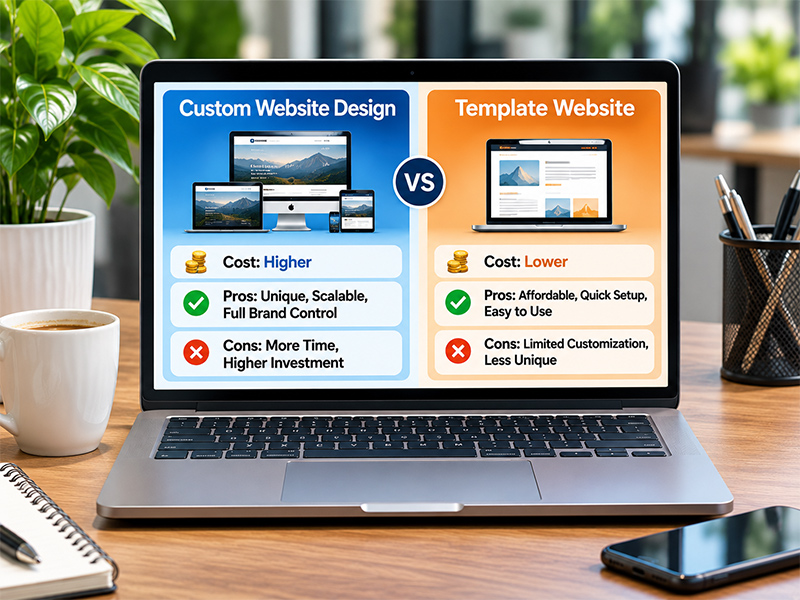
Custom Website vs Template Website: Quick Comparison
| Factor | Template Website | Custom Website |
|---|---|---|
| Upfront cost | Lower | Higher |
| Launch time | Days to a couple of weeks | A few weeks or more |
| Design uniqueness | Shared with many sites | Unique to your brand |
| Flexibility | Limited by the theme | Built around your needs |
| Speed | Can be slow if the theme is heavy | Can be optimised from the start |
| Best for | Startups, tight budgets, simple sites | Growing brands, lead generation, unique features |
Custom Website vs Template Website: Cost Breakdown in India
A premium WordPress theme usually costs a small one-time fee, and many builders charge a monthly subscription. However, the theme is only one part. You still need a domain, hosting, setup, content and support. At Duggal Infotech, starter business websites start from ₹10,000 and dynamic WordPress websites from ₹20,000, while larger custom and e-commerce projects are quoted separately. For broader market ranges, read our website development cost in India guide.
Pros and Cons of Template Websites
Pros
- Lower upfront cost.
- Faster launch.
- Good for testing a new business idea.
Cons
- Your site may look like many others.
- Heavy themes can load slowly and hurt Core Web Vitals.
- Unused features add bloat and security risk.
- Changes outside the template’s options can be difficult.
Pros and Cons of Custom Websites
Pros
- A unique design that matches your brand.
- Pages planned around how your customers buy.
- Cleaner code and better speed when built well.
- Easier to add features as you grow.
Cons
- Higher upfront investment.
- Longer planning and design time.
- Quality depends heavily on the developer you choose.
Which Is Better for SEO?
In the custom website vs template website debate, search engines do not reward either type directly. Instead, they reward speed, mobile usability, clear structure and helpful content. A lightweight template can rank well, and a poorly built custom site can rank badly. That said, custom builds make it easier to control headings, schema, page speed and internal links. Check your pages against Google’s Core Web Vitals guidance whichever route you choose.
When to Choose a Template Website
- Your budget is limited and you need to launch quickly.
- You need a simple brochure site with a few pages.
- You are testing a new product or service.
When to Choose a Custom Website
- Your website is a main source of leads or sales.
- You want to stand out from competitors in your city.
- You need features such as bookings, calculators or integrations.
- You plan to invest in SEO and paid ads, where conversion rate matters.
The Middle Option: Customised Template
Many small businesses choose a middle path: a lightweight theme customised with unique sections, brand colours, real photos and clear calls to action. This keeps costs reasonable while avoiding a generic look. It also allows you to move to a fully custom design later. Our website design services offer both approaches.
Questions to Ask Before You Decide
Before you settle the custom website vs template website question, ask yourself:
- What is the main goal of the website: information, leads or sales?
- How often will you update content, and who will do it?
- Do you need features that templates do not offer?
- What will the website cost over three years, including maintenance?
- Can you see examples of similar sites? Browse our portfolio.
Final Verdict
In the custom website vs template website choice, a template is a smart start when budget and speed matter most. A custom website is the better long-term investment when your site must generate leads, build trust and stand out. Therefore, decide based on your goals and growth plans, not only the upfront price.
Frequently Asked Questions
What is the difference between a custom website and a template website?
A template website uses a pre-designed theme with your content added, while a custom website is designed specifically around your business, brand and goals.
Is a template website bad for SEO?
Not necessarily. Lightweight templates can rank well. Problems usually come from heavy themes, slow pages and thin content.
Which is cheaper, custom or template?
A template website is usually cheaper upfront. A custom website costs more but can deliver better long-term value for lead generation.
Can I start with a template and switch to custom later?
Yes. Many businesses start with a customised template and move to a fully custom design as they grow.
How much does a website cost at Duggal Infotech?
Starter business websites start from ₹10,000 and dynamic WordPress websites from ₹20,000. Custom and e-commerce projects are quoted separately.
Not sure whether you need a custom or template website? Call +91-9814052984 or contact Duggal Infotech for honest advice.