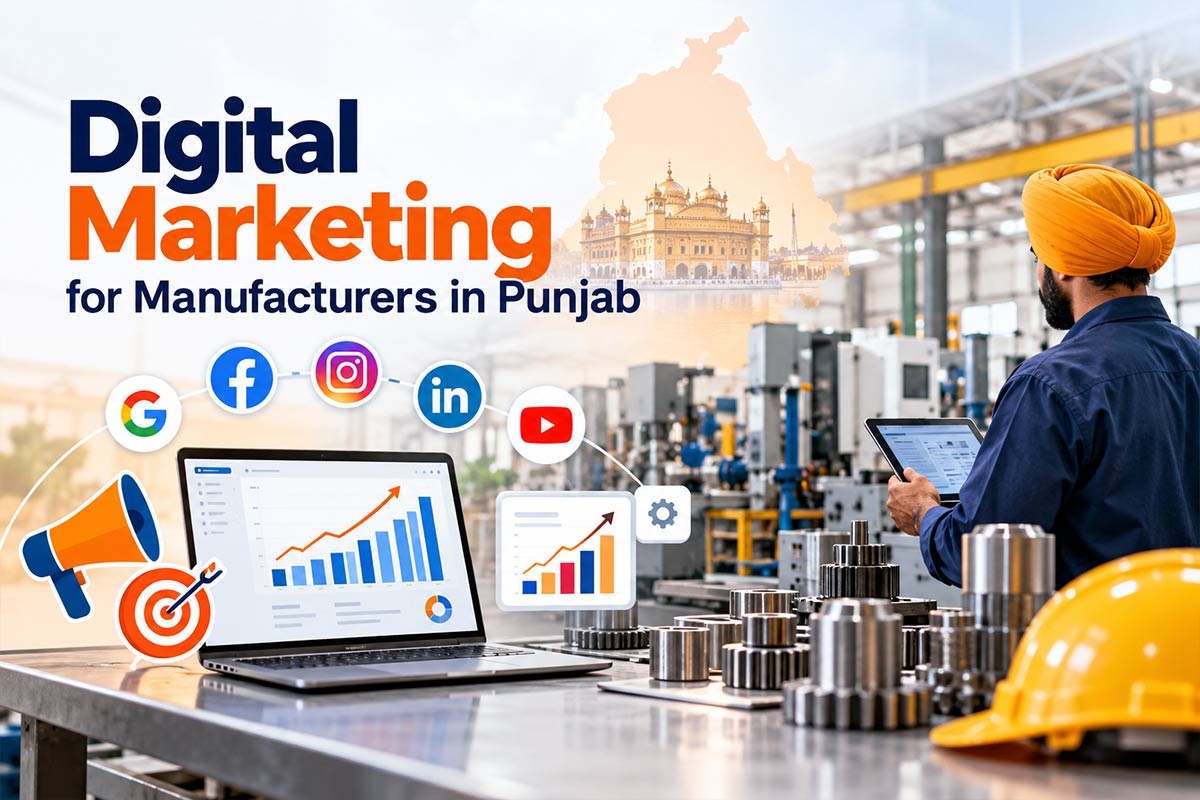
 Punjab’s factories make products that reach every corner of India and many countries abroad. Yet a lot of these manufacturers still find buyers the old way: trade fairs, distributors and word of mouth. Digital marketing for manufacturers adds a steady, measurable source of enquiries from buyers who now research suppliers online before they ever pick up the phone.
This guide explains how manufacturers and MSMEs in Punjab can use websites, search, B2B platforms, LinkedIn and WhatsApp to win distributors, dealers and export orders. It is practical, budget-aware and written for factory owners, not marketers.
Why Digital Marketing for Manufacturers Matters in Punjab
Punjab has a deep manufacturing base. According to IBEF’s Punjab state profile, the state is the source of about 75% of India’s sports goods production and 95% of India’s woollen knitwear production. Its key industries include bicycles and bicycle parts, tractors and auto components, and textiles. IBEF puts Punjab’s merchandise exports at about US$ 7.16 billion in FY26, led by engineering goods, rice, pharmaceuticals and cotton yarn.
Clusters are well known across the state. Ludhiana is famous for hosiery, cycles and auto parts. Jalandhar is known for sports goods and hand tools. Batala and Mandi Gobindgarh have long traditions in machinery and steel. Buyers already search for these products online. The question is whether they find your factory or someone else’s.
How B2B Buyers Find Manufacturers Today
Industrial buying is slower and more careful than consumer shopping. A purchase manager or distributor usually follows a journey like this.
- Search: they look up the product, specification or supplier location on Google.
- Shortlist: they compare websites, catalogues, certifications and B2B listings.
- Verify: they check company age, factory photos, client names, GST details and reviews.
- Contact: they send an enquiry, request a quote or message on WhatsApp.
- Negotiate: samples, pricing and terms are discussed over weeks or months.
Digital marketing for manufacturers is about being present and convincing at the first three stages. If your factory is invisible or looks outdated online, you lose buyers before you know they existed.
The Core Channels for Manufacturers
1. A professional, product-rich website
Your website is your 24-hour sales office. It needs product pages with clear specifications, sizes, materials, MOQ, certifications and downloadable catalogues. Add factory photos, machinery details and a simple enquiry form on every page. Our guide to website design for exporters and manufacturers explains what your site actually needs, and our manufacturer website design page shows our approach.
2. SEO for product and specification searches
Industrial buyers search very specifically, such as “MS flange manufacturer in Punjab” or “knitted jacket supplier Ludhiana”. These searches have low volume but high value. One good order can pay for a year of SEO. Create a page for each product range and answer technical questions buyers ask. See our SEO services.
3. Google Ads for high-intent enquiries
Search ads can bring enquiries quickly for specific products and regions. Target business keywords, exclude retail searches and send clicks to the exact product page. Our Google Ads management team sets up campaigns that track quote requests, not just clicks.
4. B2B marketplaces and directories
Platforms such as IndiaMART, TradeIndia and industry directories bring ready buyers, especially for MSMEs. Keep listings complete, consistent with your website and quick to respond. Treat them as one channel, not your whole strategy, because you do not own the buyer relationship there.
5. LinkedIn for decision-makers
LinkedIn helps you reach purchase heads, engineers and distributors. Share factory updates, new product launches, certifications and trade fair participation. Personal posts from the owner or sales head often perform better than company page posts.
6. WhatsApp for dealers and repeat orders
Dealers and distributors already use WhatsApp daily. Use WhatsApp Business for catalogues, price list updates, dispatch notices and new product alerts. Our WhatsApp marketing guide explains setup and rules.
7. Content that proves expertise
Short videos of machines running, quality checks and packing build trust faster than any brochure. Technical articles and buying guides also help with SEO. Our content marketing service can turn factory knowledge into useful content.
Digital Marketing for Exporters
If you sell abroad, your digital marketing must work for foreign buyers too.
- Write for global buyers. Use clear English, international units and certifications buyers recognise.
- Create country or language pages only when you have real demand from those markets.
- Show export proof. Mention countries served, export registrations and shipping terms you support.
- Target ads by country. Run small campaigns in your top export markets and measure enquiries.
Google’s guide to managing multi-regional and multilingual sites explains how to set up international pages correctly. See also our page on website design for exporters and importers.
How to Build a Digital Marketing Plan for a Factory: Step by Step
- List your best products and buyers. Pick the product ranges with the best margins and the buyer types you want more of.
- Upgrade your website. Add detailed product pages, specifications, certifications, factory photos and enquiry forms.
- Set up tracking. Count enquiries, calls and WhatsApp clicks so you know which channel brings real buyers.
- Optimise for specific searches. Target product, specification and location keywords on each product page.
- Complete B2B listings and Google profile. Keep details consistent across IndiaMART, directories and Google Business Profile.
- Launch a focused ad campaign. Run Google Search ads for two or three high-value products with tight targeting.
- Follow up and review monthly. Reply to enquiries within hours and track which leads become orders.
Combine Trade Fairs With Digital Marketing
Trade fairs and exhibitions still matter for Punjab’s industries. Digital marketing for manufacturers does not replace them. It makes every fair more productive.
- Before the fair: announce your stall number on LinkedIn, WhatsApp and your website, and invite existing buyers to visit.
- At the fair: use a QR code on your stall that opens your product catalogue page and enquiry form.
- After the fair: send every visitor a WhatsApp or email follow-up within two days with the catalogue and contact details.
- Use the content: post photos and short videos from the fair to show your business is active and growing.
A visitor who meets you at a fair will almost always check your website afterwards. A strong, detailed site turns that interest into a serious enquiry, while a weak one can undo the good impression you made in person.
The same logic applies to dealer meets and factory visits. Every offline meeting should point people to an online place where they can learn more and contact you easily.
Measuring Results: Enquiries, Not Traffic
A manufacturer may get only a handful of enquiries from a page each month, and that can still be excellent. One distributor or export order can be worth lakhs. Judge success by qualified enquiries, samples requested, quotes sent and orders won.
| Metric | Why it matters |
|---|---|
| Qualified enquiries | Shows real buyer interest |
| Quote requests | Signals serious purchase intent |
| Cost per enquiry | Shows which channel is efficient |
| Enquiry-to-order rate | Shows sales follow-up quality |
| Order value by source | Shows which channel brings the best buyers |
Our guide to digital marketing ROI explains how to link these numbers to your marketing spend.
Common Mistakes Manufacturers Make Online
- One-page websites. A single page with a phone number does not convince serious buyers.
- No specifications. Buyers leave when they cannot find sizes, grades or materials.
- Slow replies. Enquiries that wait days often go to faster competitors.
- Stock photos. Real factory images build far more trust.
- Depending on one marketplace. Rules and fees can change. Your own website is the asset you control.
Frequently Asked Questions
What is digital marketing for manufacturers?
Digital marketing for manufacturers is the use of websites, SEO, Google Ads, B2B platforms, LinkedIn, WhatsApp and content to reach distributors, dealers, industrial buyers and export customers online.
Does digital marketing work for B2B manufacturing businesses?
Yes. Industrial buyers research suppliers online before contacting them. A strong website, targeted search visibility and quick follow-up help manufacturers win more qualified enquiries.
Is IndiaMART enough for my factory?
B2B marketplaces can bring useful leads, but you do not own the buyer relationship there. Combine them with your own website, SEO and direct channels like WhatsApp for long-term growth.
Should manufacturers use social media?
Yes, especially LinkedIn and YouTube. Factory videos, product demos and updates build trust with distributors and buyers. Instagram can also help consumer-facing brands such as sports goods and apparel.
How can a Punjab manufacturer get export enquiries online?
Build an English-language website with full specifications and certifications, target product searches in your export markets with SEO and ads, and list on reputable international B2B platforms.
How long does it take to see results?
Ads and marketplace listings can bring enquiries within weeks. SEO for product searches usually takes several months, but it brings steady enquiries for a long time afterwards.
Final Word
Punjab’s manufacturers already make products the world wants. Digital marketing for manufacturers simply makes sure buyers can find you, trust you and contact you easily. Start with a strong website and a few focused channels, reply fast and measure orders, not likes.
Want more enquiries for your factory? Explore our digital marketing services, see our work for manufacturers in Batala and nearby towns, or contact Duggal Infotech in Amritsar.